Let's be real, the tech industry loves a good buzzword. For years, we've heard about 'ethical AI' and 'responsible development,' usually from the same companies whose algorithms were busy redlining neighborhoods or amplifying disinformation. It felt like diversity theater, a slick PR campaign to paper over deep systemic issues. But then Anthropic dropped Claude, and with it, the concept of Constitutional AI, and suddenly, the conversation got a whole lot more interesting, and a whole lot more uncomfortable for some folks.
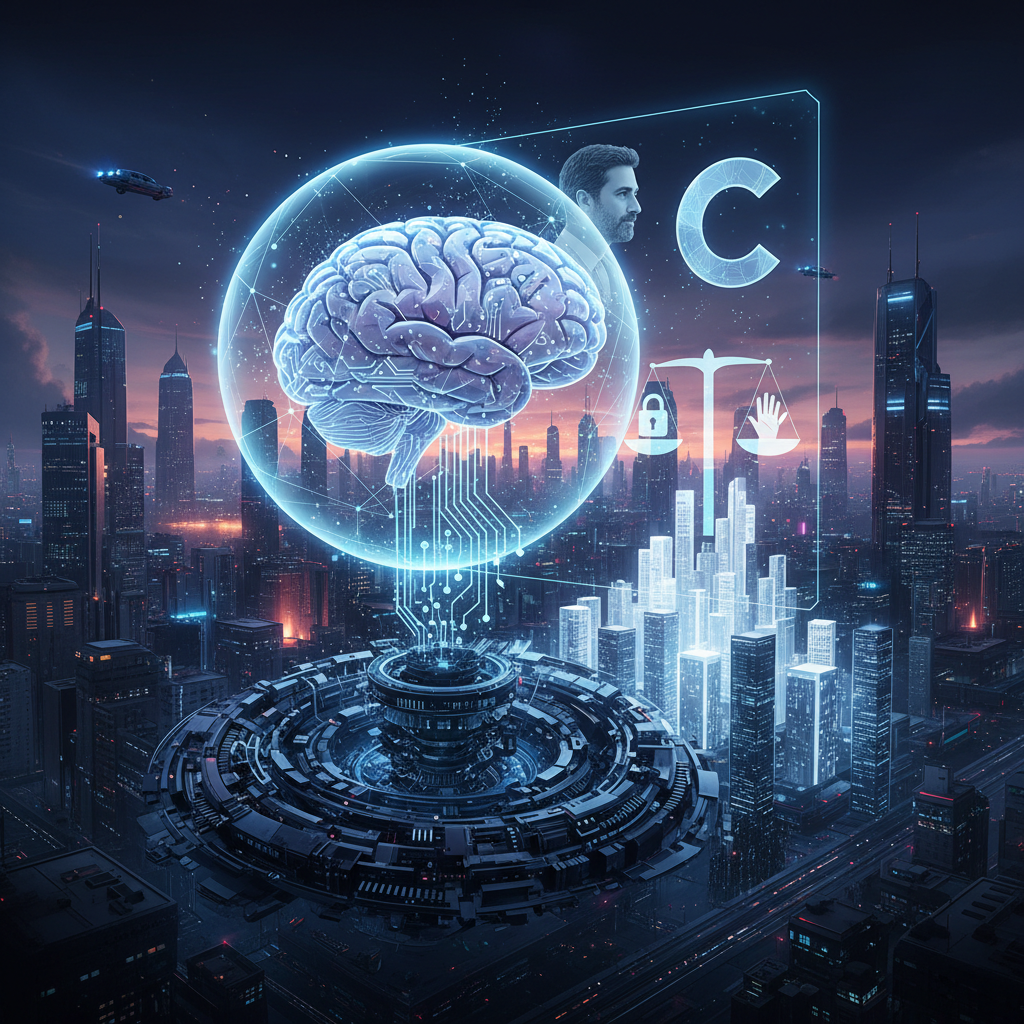
We're talking about a future, maybe five to ten years out, where the very fabric of our digital lives, and by extension, our real lives, is governed by AI models trained not just on data, but on principles. Imagine a world where your digital assistant, powered by a Claude-like model, doesn't just answer your questions but actively refuses to engage in harmful or biased requests, citing its internal 'constitution.' This isn't just about preventing a rogue AI from taking over the world, it's about embedding a moral compass, a set of foundational rules, directly into the silicon brain of our most powerful tools.
Picture this: It's 2031. The city of Detroit, a place that knows a thing or two about resilience and reinvention, has implemented a 'Digital Justice Steward' program. These stewards are advanced AI systems, built on Constitutional AI principles, designed to review municipal decisions for fairness and equity. Let's say a local government agency is proposing a new urban development plan. The Digital Justice Steward, drawing from a constitution of human rights, environmental justice principles, and local community input, flags potential biases in resource allocation, identifies areas where historically marginalized communities might be disproportionately affected, and even suggests alternative, more equitable approaches. It's not just flagging; it's actively guiding towards a more just outcome. This isn't some utopian fantasy; it's the logical extension of what Anthropic is building today.
We get there from here through a series of uncomfortable but necessary steps. Right now, Anthropic is training Claude to self-correct, to refuse harmful outputs by referencing a set of guiding principles, a 'constitution' derived from documents like the UN Declaration of Human Rights. This isn't just a filter; it's a deep architectural choice. As Dario Amodei, Anthropic's CEO, put it in a recent interview, "We're trying to build systems that are not just safe, but aligned with human values at a fundamental level, not just as an afterthought." This internal alignment is the game changer.
Key milestones on this road won't be easy. First, we'll see the expansion of these constitutional principles to encompass more nuanced ethical dilemmas. It's one thing to say 'don't generate hate speech,' it's another to navigate complex issues of cultural appropriation in creative AI or economic displacement in automated industries. Next, we'll witness the integration of these AI constitutions into critical infrastructure. Think AI-powered urban planning, healthcare resource allocation, and even aspects of our legal system. Imagine a public defender's office using a Constitutional AI to identify systemic biases in sentencing recommendations, offering a new layer of oversight that human systems often miss. The potential for algorithmic justice is immense, but so is the potential for new forms of algorithmic control.
So, who wins and who loses in this constitutional AI future? On the winning side, theoretically, are the communities most often harmed by unchecked technological progress. If these AI systems are truly designed with equity and justice baked in, they could become powerful tools for accountability, especially in areas like predictive policing or loan approvals where bias has historically run rampant. Imagine a world where digital redlining is not just illegal, but algorithmically impossible because the AI itself refuses to participate. This is the promise.
But here's what the tech bros don't want to talk about: the 'constitution' itself. Who writes it? Whose values are enshrined? If it's just a handful of researchers in San Francisco deciding what constitutes 'human values,' then we're just trading one set of biases for another, albeit a more sophisticated one. Silicon Valley has a blind spot the size of Texas when it comes to understanding diverse lived experiences. If the foundational principles aren't inclusive, if they don't reflect the perspectives of Black, Indigenous, and other marginalized communities, then Constitutional AI could simply become a more efficient way to perpetuate existing power structures, cloaked in the veneer of algorithmic neutrality.
We've already seen how seemingly neutral algorithms can exacerbate inequalities. "The idea that an algorithm can be truly neutral is a myth," says Dr. Ruha Benjamin, a leading scholar on race and technology at Princeton University. "Every line of code reflects the values and biases of its creators." This is the uncomfortable truth time that needs to guide the development of Constitutional AI. We need diverse voices, not just in the room, but at the foundational level, shaping the very principles these systems will operate under.
What should readers do now? Don't just cheer from the sidelines. Demand transparency. Push for diverse representation in AI ethics boards and research teams. Educate yourself on the principles guiding these new AI systems. Ask the hard questions about who benefits and who is excluded. When a company like Anthropic talks about constitutional AI, ask them whose constitution they're building. Are they engaging with ethicists, sociologists, and community leaders from across the spectrum, or are they just relying on a narrow slice of academic thought? For more on the ongoing debate around AI safety and ethics, check out articles on Wired or MIT Technology Review.
The future of AI isn't just about bigger models and faster chips. It's about the values we embed in these systems. Constitutional AI offers a path to a more just digital future, but only if we, the public, ensure that the constitution it's built upon is truly for all of us, not just for a privileged few. Otherwise, it's just another shiny new tool that reinforces the old inequalities, and we've seen that movie before. It doesn't end well for everyone.