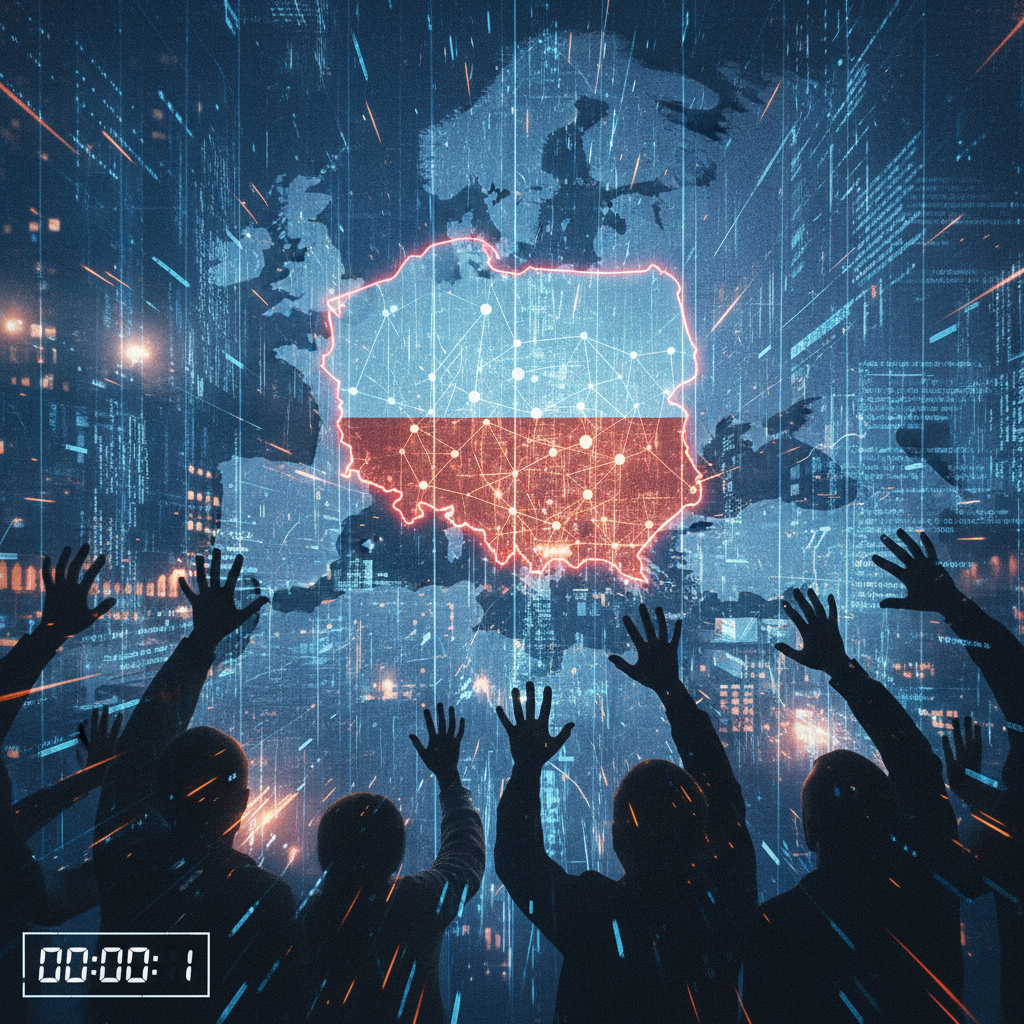
The digital landscape, much like the physical one, is increasingly defined by borders, not just of geography, but of technology. Today, we witness a seismic shift in this paradigm, one that places Poland squarely at the epicenter of an escalating technology cold war. A recent, unprecedented announcement from a powerful non-European bloc has imposed stringent AI-related sanctions directly impacting Polish entities, a move that has sent shockwaves through Warsaw and Brussels alike.
This is not merely a bureaucratic decree, it is a strategic maneuver, a digital Iron Curtain descending with alarming speed. The sanctions, which came into effect at midnight Central European Time, specifically target Polish companies and research institutions engaged in advanced AI development, particularly those working on large language models and quantum-resistant cryptography. The official justification cites concerns over dual-use technologies and potential intellectual property leakage, but the underlying currents are far more complex, reflecting a deepening global struggle for technological supremacy.
From a systems perspective, the algorithm works like this: identify a nation demonstrating rapid, independent technological growth in critical sectors, then apply pressure to either align its trajectory or impede its progress. Poland, with its robust engineering talent and growing startup ecosystem, has become an undeniable force in European AI. This rapid ascent, however, has inadvertently placed it in the crosshairs of larger geopolitical ambitions.
The immediate impact is palpable. Several high-profile Polish AI startups, particularly those with significant international partnerships or relying on specific foreign-sourced compute infrastructure, have reported immediate operational disruptions. "We woke up to a new reality," stated Dr. Elżbieta Kowalska, CEO of Synergia AI, a Warsaw-based firm specializing in ethical AI for enterprise solutions. "Our access to critical cloud computing resources has been partially severed, and several key international data exchange agreements are now in jeopardy. This is not just about business, it is about the future of European innovation." Her sentiment echoes across the Polish tech community, a community that has prided itself on its resilience and ingenuity.
Official reactions have been swift and varied. The Polish Ministry of Digital Affairs convened an emergency session this morning. Minister Janusz Wiśniewski, visibly somber, addressed the press. "This is an act of economic aggression disguised as security protocol," he declared. "Poland has always been a staunch advocate for open innovation and international cooperation. We will not be bullied into abandoning our technological sovereignty. We are exploring all diplomatic and legal avenues to challenge these baseless restrictions." His words, while firm, betray the gravity of the situation. The European Union has also weighed in, with a spokesperson for the European Commission expressing "deep concern" and vowing to "closely monitor the situation and assess potential retaliatory measures."
Expert analysis paints a grim, yet nuanced picture. Professor Marek Nowak, a leading cybersecurity and international relations expert at the Jagiellonian University in Kraków, offered his perspective. "What we are witnessing is a direct consequence of the global race for AI dominance. Poland's engineering talent explains why it has become such an attractive target. Our universities are producing world-class AI researchers, our startups are securing significant investment, and our government has been proactive in fostering a supportive environment for deep tech. This success, unfortunately, makes us a pawn in a much larger game. These sanctions are designed not just to slow us down, but to send a clear message to other emerging tech powers: choose a side, or face isolation." Professor Nowak's analysis underscores the precarious position of nations caught between technological titans.
The implications extend beyond immediate economic disruption. This move could fundamentally alter the trajectory of AI development within Europe. If Polish companies are forced to decouple from certain global supply chains and research networks, it could lead to the creation of parallel, potentially less efficient, ecosystems. It might also accelerate calls for greater European technological independence, pushing initiatives like the European High Performance Computing Joint Undertaking to new levels of urgency. The question now becomes: can Europe coalesce its resources quickly enough to mitigate the damage and forge a truly sovereign AI infrastructure?
What happens next is a critical juncture. Poland is expected to formally appeal the sanctions through international legal bodies, a process that could take months, if not years. In the interim, Polish AI firms will be forced to pivot, seeking alternative partners, re-architecting their cloud strategies, and potentially re-shoring some operations. This could paradoxically spur domestic innovation and collaboration within the European bloc, creating a more integrated, albeit initially slower, European AI ecosystem. However, the cost in terms of lost opportunities and delayed progress cannot be overstated.
Readers should care deeply about this development because it is a stark illustration of how geopolitical tensions are increasingly played out in the digital realm, with AI as the primary battleground. The free flow of information and technology, once a cornerstone of globalization, is being fractured by national interests and strategic competition. This is not just about Poland, it is a precursor for what other nations, particularly those in critical geographic or economic positions, might face. The future of AI, and indeed the future of global technological cooperation, hangs in the balance. As we navigate this new era, the lessons from Poland's digital iron curtain will be crucial for every nation striving to build its own technological future. The world is watching, and the stakes could not be higher.
For further reading on the broader implications of AI in geopolitical contexts, consider reports from MIT Technology Review or articles covering the global AI arms race on Reuters Technology. The ongoing developments highlight the urgent need for a cohesive European strategy, a topic frequently discussed on platforms like TechCrunch Artificial Intelligence.