
Stockholm, Sweden. April 2026.
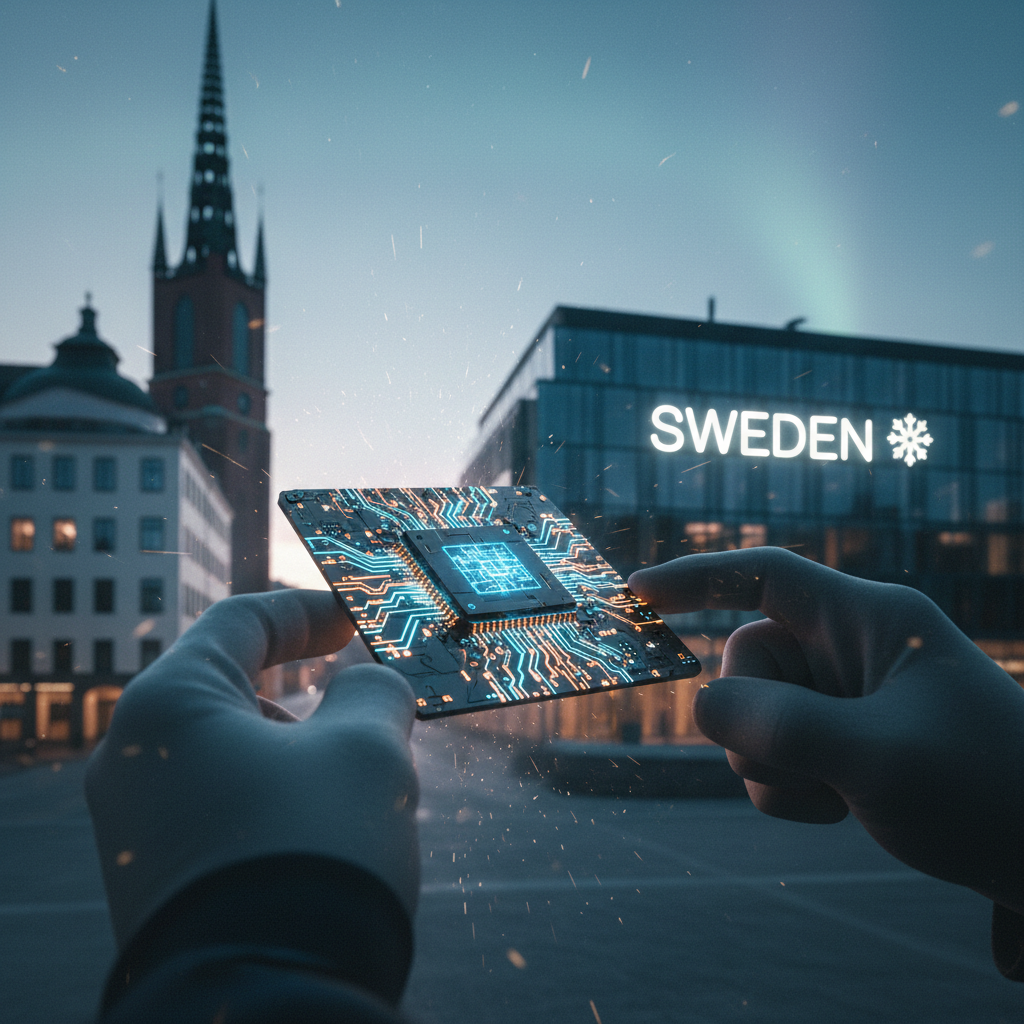
The global pursuit of artificial intelligence has long been characterized by a relentless drive for computational power, often measured in the sheer number of floating-point operations per second. Yet, a quiet but potentially transformative development from Swedish telecommunications giant Ericsson, headquartered here in Kista, suggests a more nuanced approach may be gaining traction. Sources close to the company, corroborated by preliminary academic disclosures, indicate Ericsson is making significant strides in neuromorphic computing, specifically in the development of AI chips designed to mimic the human brain's architecture more closely than traditional Von Neumann systems.
This is not merely an incremental improvement on existing GPU or Asic designs. Neuromorphic chips aim to integrate memory and processing, operating on event-driven, asynchronous principles, much like biological neurons. The promise is immense: vastly reduced energy consumption, increased efficiency for certain AI tasks, and a potential pathway to more sophisticated, brain-like intelligence. For a nation like Sweden, deeply committed to sustainability and technological self-reliance, such a development resonates profoundly.
The breaking news, still somewhat veiled in corporate discretion, centers around a new prototype chip architecture reportedly developed in collaboration with a consortium of European research institutions. While Ericsson has not yet issued a formal press release, whispers from the European Microelectronics Summit in Brussels last week confirm that their research division presented findings indicating a significant breakthrough in scaling neuromorphic arrays while maintaining low power envelopes. This is a critical hurdle that has historically plagued the field.
“We are moving beyond the brute-force approach,” stated Dr. Lena Karlsson, a lead researcher in advanced computing at KTH Royal Institute of Technology, speaking off the record but confirming the general direction of Swedish efforts. “The energy demands of current large language models are unsustainable. Neuromorphic computing offers a potential escape route, especially for edge AI applications where power is at a premium.” Her comments underscore the practical, engineering-focused mindset prevalent in Swedish innovation.
Official reactions have been cautious but optimistic. A spokesperson for the Swedish Agency for Innovation Systems, Vinnova, acknowledged the strategic importance of such research. “Investing in foundational technologies like neuromorphic computing is vital for Sweden’s long-term competitiveness and digital sovereignty,” the spokesperson noted, emphasizing the national interest in advanced hardware development. This sentiment aligns with broader European initiatives to reduce reliance on non-European chip manufacturers, a topic frequently discussed in Brussels and beyond.
Let's look at the evidence. While companies like Intel with their Loihi chip and IBM with NorthPole have been pioneers in this space for years, Ericsson’s reported advancements focus on a novel interconnectivity scheme and a more robust integration with existing telecommunications infrastructure. This could provide a distinct advantage, positioning neuromorphic chips not just as experimental hardware, but as a practical component for future 5G and 6G networks, processing data closer to the source with unprecedented efficiency. Imagine base stations or IoT devices capable of complex AI inference without constant cloud connectivity or massive power draw. This is the vision being quietly pursued.
However, it is crucial to temper enthusiasm with a healthy dose of skepticism. Neuromorphic computing, despite its tantalizing potential, has yet to find its 'killer application' that justifies a widespread shift from established architectures. The programming paradigms are vastly different, requiring new algorithms and software development kits. “The challenge is not just the hardware, but the entire ecosystem,” explains Professor Anders Bergström, a computer architecture expert at Chalmers University of Technology. “We are asking developers to rethink how they approach computation. This is a significant barrier to adoption, even for a technology as promising as this.” Professor Bergström’s analysis reflects the pragmatic view that often characterizes Scandinavian data paints a clearer picture than mere speculation.
What happens next? Ericsson is expected to provide more concrete details in the coming months, likely coinciding with a major industry event. Should their claims hold up under scrutiny, it could trigger a new wave of investment and research in neuromorphic hardware across Europe. The implications for edge AI, autonomous systems, and even brain-computer interfaces are profound. This is not about replacing NVIDIA’s GPUs overnight, but about carving out new niches where energy efficiency and real-time, event-driven processing are paramount.
For consumers, the immediate impact may not be visible, but the underlying technology could power more intelligent, energy-efficient devices and services in the future. Think of longer battery life for smart devices, more responsive AI assistants, and more secure local processing of sensitive data. For businesses, particularly those in telecommunications, automotive, and industrial automation, this could represent a significant competitive advantage. The Swedish model suggests a different approach, one that prioritizes long-term sustainable innovation over short-term speculative gains.
This development from Ericsson, if validated, underscores a broader trend: the diversification of AI hardware. As the demands of artificial intelligence continue to grow, a single architectural paradigm will likely prove insufficient. Neuromorphic computing, with its brain-inspired efficiency, offers a compelling alternative for specific workloads. The question remains whether Ericsson and its European partners can translate this promising research into scalable, commercially viable products that can genuinely compete in a market dominated by established players. The journey from laboratory breakthrough to market dominance is long and fraught with challenges, but the potential rewards are immense for those who can navigate it successfully. The global AI community will be watching closely for further details from Stockholm.
For more insights into the evolving landscape of AI hardware, consider exploring analyses on MIT Technology Review and Ars Technica. The intersection of AI and telecommunications is also a rapidly developing field, often covered by TechCrunch.