The geopolitical chess board of artificial intelligence is not merely a contest of algorithms and data, but fundamentally, a struggle for the silicon that powers it. As NVIDIA, AMD, and Intel vie for dominance in the global AI chip market, a parallel, equally fierce battle is being waged in the halls of Western governments: how to control the flow of these critical components to nations deemed adversaries. For Russia, this has translated into an increasingly suffocating regulatory environment, ostensibly designed to cripple its technological advancement. Yet, as always, the official story doesn't add up, and the reality on the ground is far more nuanced, even contradictory.
The latest policy maneuver, enacted by a consortium of European Union members and the United States, aims to further restrict Russia's access to high-performance graphics processing units, or GPUs, and specialized AI accelerators. The regulations, which came into full effect in late 2025, specifically target any semiconductor product with a processing capability exceeding 100 teraflops, or those incorporating advanced packaging technologies deemed critical for AI training. The stated intent is clear: to prevent Russia from developing advanced AI capabilities that could be used for military applications, surveillance, or to bolster its industrial base in defiance of international sanctions. This move is spearheaded by figures like U.S. Commerce Secretary Gina Raimondo and European Commissioner for Competition Margrethe Vestager, who have consistently advocated for a more stringent export control regime.
In practice, what does this mean for a Russian researcher or a startup founder in Moscow or Novosibirsk? It means that acquiring a brand new NVIDIA H100 or an AMD Instinct MI300X, the workhorses of modern AI, through official channels is virtually impossible. The labyrinthine export licensing process, coupled with the explicit denial policies for Russia, ensures that direct purchases are blocked. This has not, however, brought Russian AI development to a grinding halt. Instead, it has fostered a parallel economy, a shadowy market where chips arrive through complex transshipment routes, often via third countries in Central Asia or the Middle East. "We estimate that roughly 60 percent of the high-end GPUs entering Russia are now sourced through indirect channels, a significant increase from pre-sanction levels," stated Dr. Elena Petrova, a senior analyst at the Russian Academy of Sciences, during a recent closed-door briefing. "The price premium is substantial, often 200 to 300 percent above market rates, but the chips still arrive."
The industry reaction within Russia has been a mix of pragmatism and frustration. Major tech players, such as Yandex and Sber, which have significant AI initiatives, have adapted by investing heavily in domestic chip design and manufacturing capabilities, albeit with limited success in matching the cutting edge of Western technology. They also maintain extensive networks for acquiring components through what are euphemistically called 'parallel imports.' Smaller startups and academic institutions, however, bear the brunt of these restrictions. "Our computational resources are severely constrained," lamented Professor Mikhail Volkov, head of the AI department at Bauman Moscow State Technical University. "We have brilliant minds, truly world-class talent, but they are often forced to work with hardware that is generations behind. Russian AI talent deserves better than to be hobbled by political maneuvering." This sentiment echoes across the country's scientific community, where the dream of pioneering breakthroughs is often tempered by the harsh reality of hardware scarcity.
Civil society, particularly the independent tech community, views these regulations with a mixture of resignation and a burgeoning sense of self-reliance. While acknowledging the political motivations, many believe the sanctions primarily harm academic research and civilian applications, rather than significantly impeding state-sponsored projects which often have more robust, albeit clandestine, procurement channels. There is a growing movement towards open source hardware initiatives, attempting to design and produce simpler, more accessible AI accelerators domestically. Projects like the 'Baikal' and 'Elbrus' processors, though not directly competing with NVIDIA's latest, represent a strategic pivot towards self-sufficiency, driven by necessity. "The sanctions have inadvertently accelerated our efforts to build our own technological sovereignty," remarked Anton Sidorov, a prominent open-source advocate in St. Petersburg. "It is a difficult path, but it forces innovation from within. We are learning to walk without relying on foreign crutches."
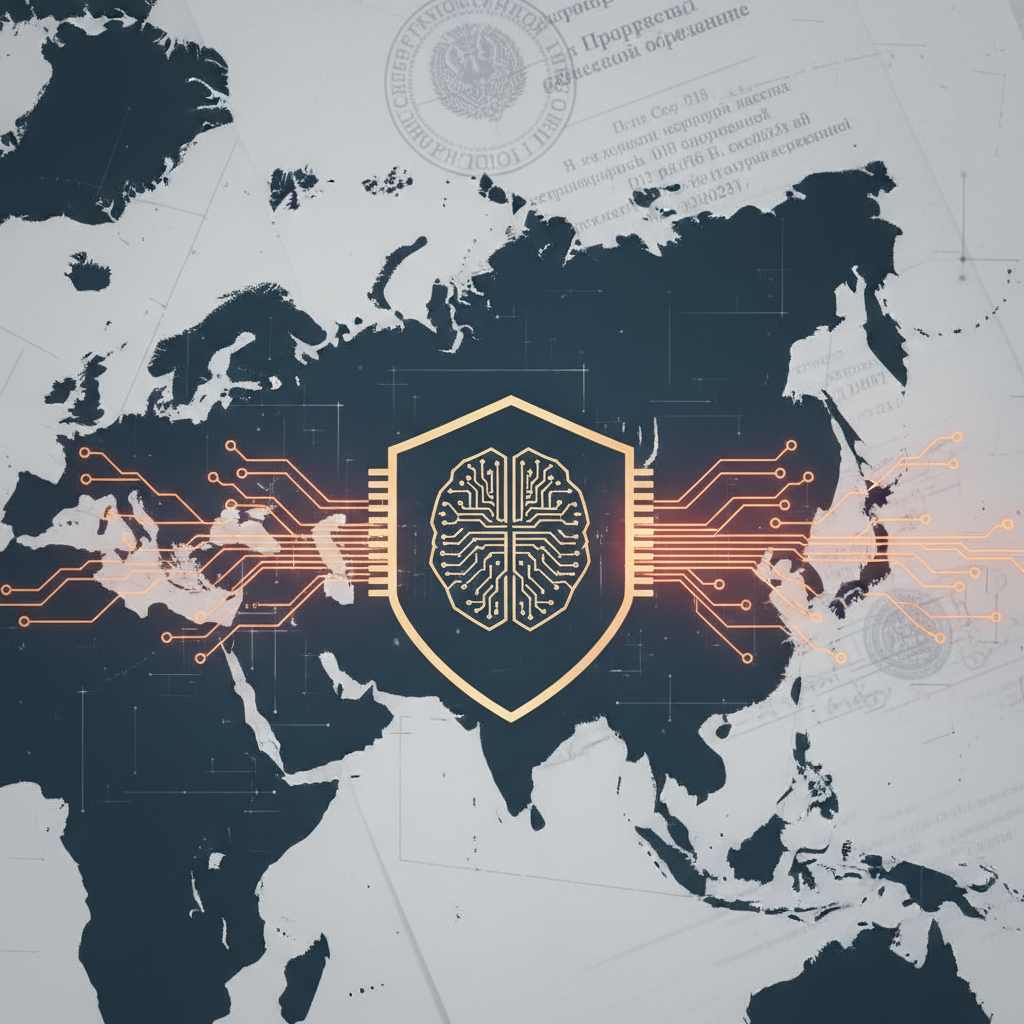
So, will these Western policies work as intended? The evidence suggests a mixed bag. On one hand, the sanctions undoubtedly raise the cost and complexity for Russia to acquire advanced AI chips, creating friction and slowing down certain aspects of development. The sheer volume of computational power required for training cutting-edge large language models, for instance, remains a significant challenge. On the other hand, the complete isolation that policymakers might envision is proving elusive. The global supply chain for semiconductors is too vast, too interconnected, and too lucrative for a complete blockade to be truly effective. The incentives for third-party intermediaries to facilitate these transfers are simply too high. Furthermore, the regulations inadvertently stimulate domestic innovation and the development of alternative supply routes, fostering a resilience that might not have emerged otherwise. The cat-and-mouse game continues, with each new restriction met by a new workaround. From my vantage point in Moscow, observing the ingenuity and determination of Russian engineers, it seems clear that while the path is arduous, the pursuit of AI capabilities will persist, perhaps through a newly forged 'chip silk road' stretching across Eurasia. The West's regulatory hammer, while heavy, has yet to crush the spirit of innovation, merely redirecting its flow. For a deeper look into the broader implications of these technological contests, one might consider reports from Reuters on AI business news or the detailed analyses found on MIT Technology Review. The struggle for technological autonomy, particularly in the realm of AI, is a global phenomenon, as evidenced by discussions around NVIDIA's AI initiatives.
Ultimately, the efficacy of these policies will not be measured by the absence of Western chips in Russia, but by the tangible impact on Russia's AI capabilities and its strategic objectives. As long as there is a demand, and a profit to be made, the chips will find their way. The question is not if, but how, and at what cost, both economic and ethical. The current regulatory framework, while well-intentioned, appears to be a sieve rather than an impermeable wall, allowing a steady, albeit expensive, trickle of technology to pass through. The true measure of success or failure will only be evident years from now, when the long-term consequences of this technological arms race fully unfold.