
The wind howls outside my window here in Reykjavík, a constant reminder of the raw power of nature that shapes our lives. It is a force that demands respect, and it is a force that has, in its own way, taught us a thing or two about resilience and innovation. This spirit, I often think, is what makes Iceland a surprising, yet vital, observation point for the biggest technological shifts happening across the globe, even something as seemingly distant as Amazon's AI-powered logistics revolution.
When we talk about Amazon, most people picture vast warehouses in warmer climates, filled with an army of robots zipping around, sorting packages with almost supernatural speed. They are right, of course. Amazon has invested billions, reportedly over $75 billion in its global fulfillment and logistics network since 2020, a significant portion of which has gone into advanced robotics and AI systems. These aren't just fancy gadgets; they are the beating heart of a system designed to get everything from a new book to a refrigerator to your doorstep in record time. But what does this mean for a place like Iceland, a small island nation perched at the edge of the Arctic, with unique logistical challenges and a deeply human-centric culture?
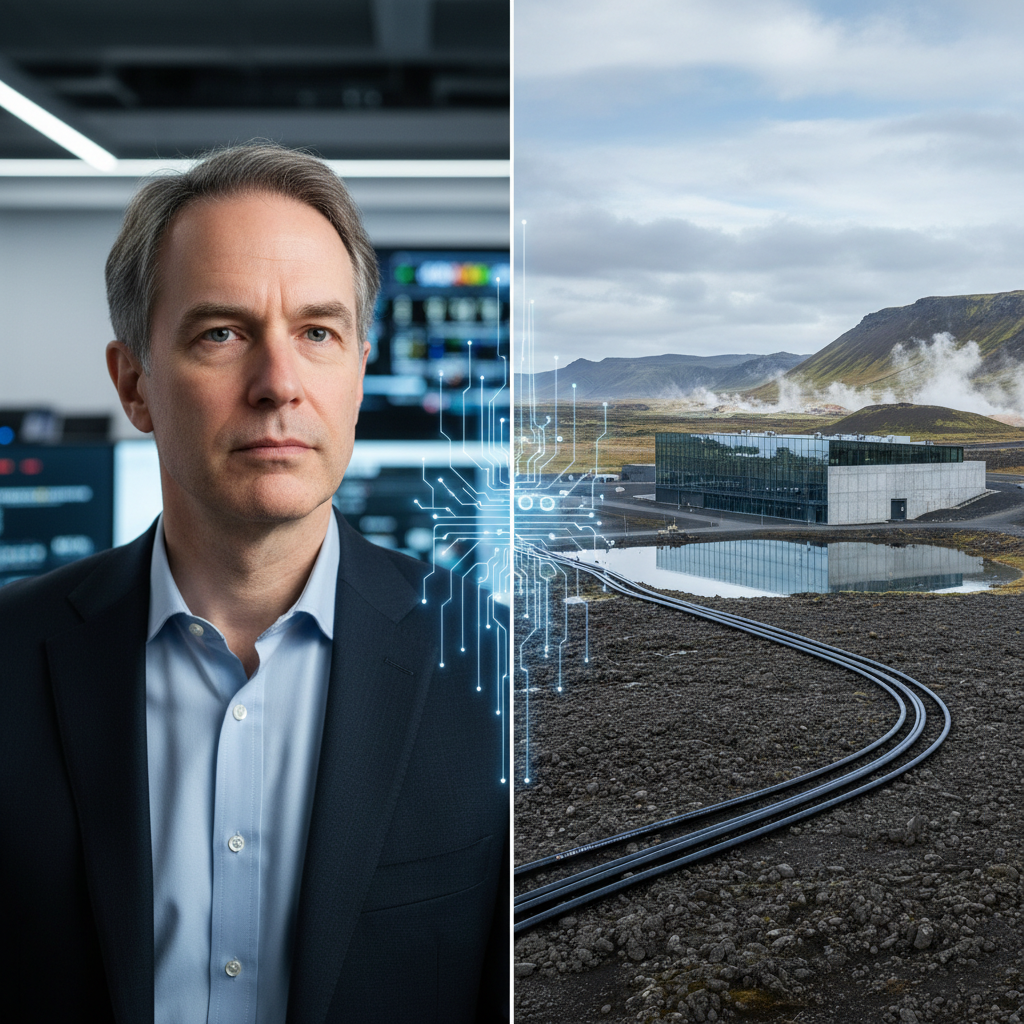
I recently spoke with Dr. Helga Þórsdóttir, a logistics expert at the University of Iceland, whose research often focuses on supply chain resilience in isolated communities. She showed me her research in a lab overlooking a glacier, a stark contrast to the bustling, automated world of Amazon. "For us," Dr. Þórsdóttir explained, her voice calm against the distant rumble of a passing truck, "every shipment is a journey, often across seas and through unpredictable weather. Efficiency is not just about speed, it is about reliability and minimizing waste, especially when you consider the carbon footprint of every imported item." She emphasized that while Amazon's scale is immense, the underlying principles of optimizing routes, predicting demand, and automating repetitive tasks are universal. "The difference is our scale, and our priorities. We are a small market, so the cost of entry for such advanced robotics can be prohibitive for local businesses, but the lessons learned are invaluable."
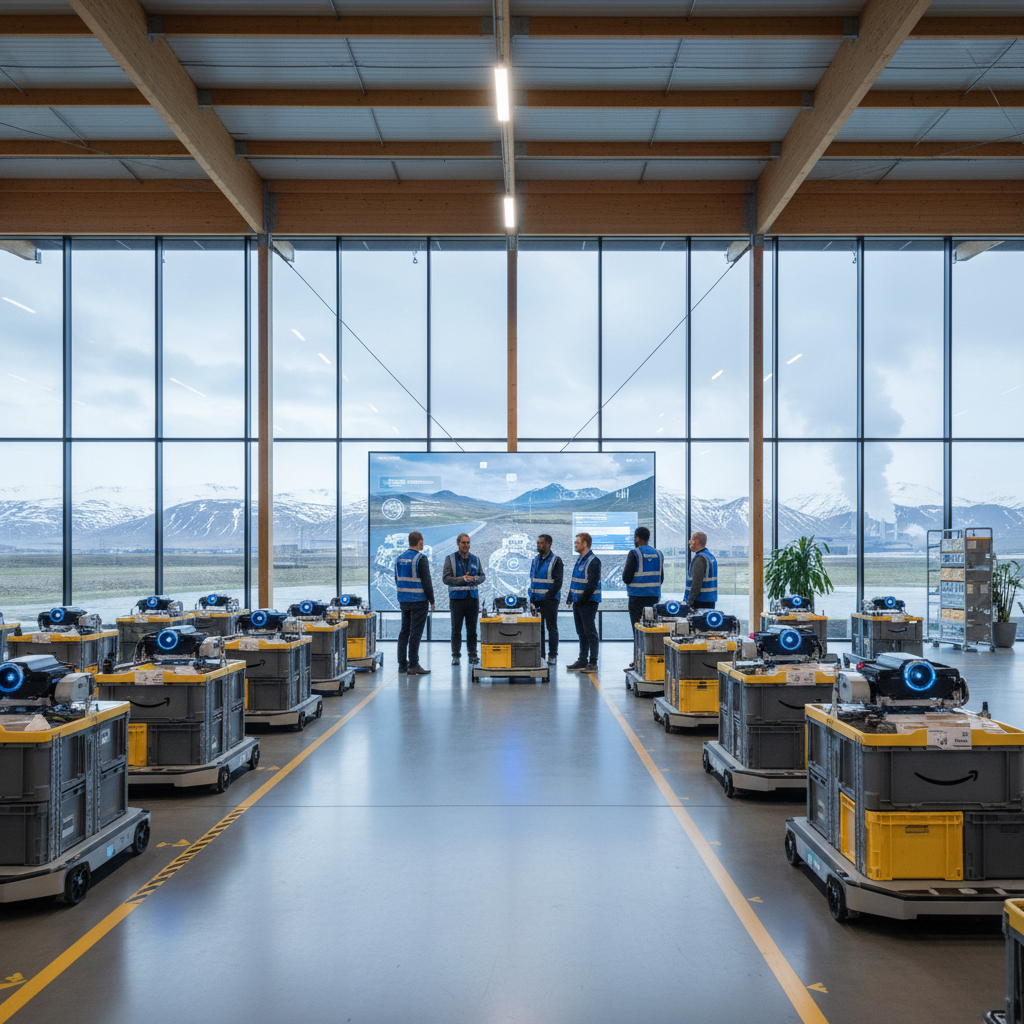
Amazon's journey into AI and robotics began in earnest with its acquisition of Kiva Systems in 2012 for $775 million, a move that transformed its warehouses. Today, Amazon Robotics operates over 750,000 mobile drive units across its global network. These robots, powered by sophisticated AI algorithms, do everything from moving shelves to picking items, working alongside human employees. The company claims these systems have led to a 25% increase in operational efficiency and have actually created new types of jobs, requiring skills in robotics maintenance and AI supervision. Andy Jassy, Amazon's CEO, has been vocal about the company's commitment to this integration. "We are still in the early innings of what AI can do for our customers and our operations," Jassy stated in a recent shareholder letter, "and we are excited about the innovations ahead, particularly in areas like robotics and generative AI to enhance our fulfillment network." This sentiment echoes a broader trend across the industry, where companies are leveraging AI to automate increasingly complex tasks, as reported by TechCrunch.
But the human element remains central, even in the most automated environments. Here in Iceland, where communities are tight-knit and personal relationships often drive commerce, the idea of fully automated logistics can feel a bit cold. I remember a conversation with a local fisherman, Jón, who often relies on small, independent logistics companies to get his catch to market in Reykjavík. "It is not just about the fastest route," he told me, "it is about knowing the person who drives the truck, trusting they will handle your fish with care, and knowing they understand the unpredictable nature of the sea." This personal touch, this understanding of local conditions, is something AI is still learning to replicate.
However, Amazon's AI is not just about moving boxes. It is also about predictive analytics. Their systems analyze vast amounts of data, from past sales trends to weather patterns and even social media buzz, to forecast demand with remarkable accuracy. This allows them to strategically place inventory closer to customers, reducing delivery times and transportation costs. For a country like Iceland, where importing goods can be costly and time-consuming, such predictive power could be transformative, helping local businesses manage inventory more effectively and reduce waste, a critical concern in our environmentally conscious society.
Consider the environmental impact, a topic close to our hearts here. Amazon has publicly committed to achieving net-zero carbon emissions by 2040, a goal that heavily relies on optimizing its logistics. Their AI systems are designed to find the most fuel-efficient routes, consolidate shipments, and even manage the charging schedules of their growing fleet of electric delivery vehicles. In the land of fire and ice, where our energy comes from geothermal and hydroelectric sources, we understand the importance of sustainability. The idea that AI can help reduce the carbon footprint of global commerce is a powerful one, even if the scale of Amazon's operations presents its own challenges.
Indeed, the challenges are significant. The initial investment in advanced robotics and AI is enormous, often out of reach for smaller enterprises. There are also ethical considerations, particularly regarding workforce displacement and the increasing reliance on algorithms for critical decisions. As Professor Ólafur Ragnarsson, a sociologist specializing in technology and labor, pointed out to me, "The question is not just 'can we automate it?' but 'should we?' We must ensure that these technologies serve humanity, not the other way around. We have a responsibility to foster innovation that enhances human dignity and opportunity, not diminishes it." This perspective is crucial, especially as AI continues to evolve and integrate into every facet of our lives, a topic often explored by MIT Technology Review.
Despite these concerns, the influence of Amazon's AI-driven logistics is undeniable. It sets a new standard for efficiency and speed, pushing other companies to innovate. For Iceland, while we may not see a massive Amazon fulfillment center spring up next to our volcanoes anytime soon, the principles and technologies are already making their way here. Local logistics companies are exploring AI for route optimization, inventory management, and even drone delivery for remote areas, albeit on a much smaller, more tailored scale. The lessons from Amazon's global experiment are being adapted, refined, and applied in ways that respect our unique geography and cultural values.
Iceland's story is unique, a testament to how a small nation can punch above its weight in innovation. We may not have the vast plains for sprawling warehouses, but our ingenuity, our respect for nature, and our focus on community mean that when AI and robotics come knocking, we approach them with a different set of questions and priorities. The future of logistics, whether powered by a global giant like Amazon or a local Icelandic startup, will ultimately be shaped by how well we integrate these powerful technologies with human needs and environmental responsibility. It is a balancing act, one that we, in our land of fire and ice, are uniquely positioned to understand. The global conversation about AI's role in our future is not just for the tech giants; it is for all of us, from the bustling cities to the quiet, windswept shores of Iceland.