
The promise of artificial intelligence has often been overshadowed by its hype, a familiar cycle for those of us who have witnessed technological shifts for decades. Yet, amidst the clamor, a quiet revolution has been unfolding, one with profound implications for human health and industrial innovation. We speak of AI's advancements in protein folding, particularly the impact of systems like Google DeepMind's AlphaFold.
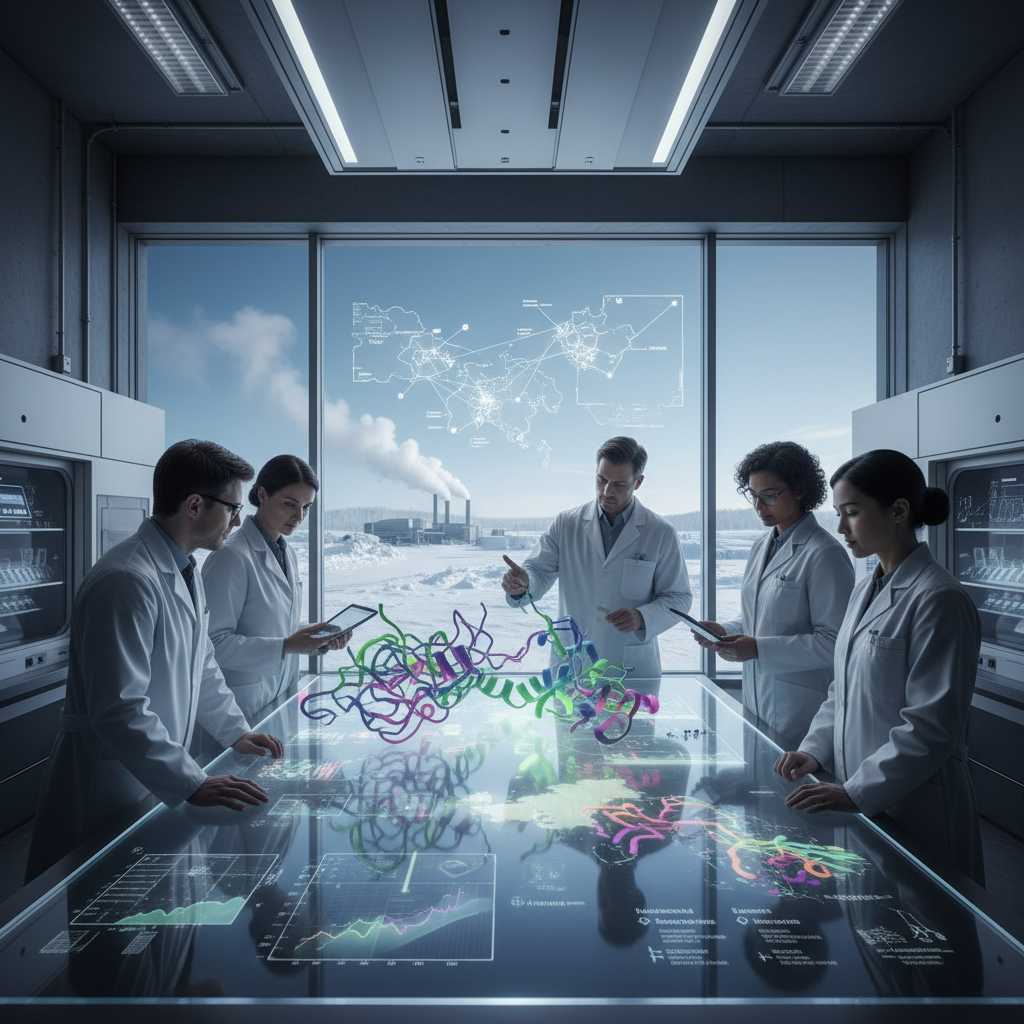
For years, understanding the intricate three dimensional structures of proteins, the fundamental building blocks of life, was a monumental challenge. Experimental methods were slow, costly, and often yielded incomplete data. This bottleneck severely hampered drug discovery, as most pharmaceuticals target specific protein structures, and the development of novel materials, which often rely on biomimicry. Then came AlphaFold, a neural network system that could predict protein structures with unprecedented accuracy, often matching experimental results. This was not merely an incremental improvement; it was a paradigm shift.
Dr. Tuomas Korpela, a senior researcher at the University of Helsinki's Faculty of Pharmacy, articulated the impact succinctly. "AlphaFold has democratized structural biology," he stated. "What once took months or even years in the lab, requiring specialized equipment and expertise, can now be approximated in hours on a computational cluster. This accelerates our initial hypotheses and allows us to focus experimental resources more effectively." This sentiment echoes across the global scientific community, with researchers reporting significant reductions in the time and cost associated with structural determination.
The implications for drug discovery are immediate and substantial. Pharmaceutical companies, from global giants to nimble startups, are integrating AI based protein prediction into their workflows. Traditional drug development pipelines, notorious for their high failure rates and multi billion dollar costs, are seeing efficiencies. By accurately predicting how potential drug compounds will bind to target proteins, researchers can filter out ineffective candidates much earlier in the process. This translates to fewer failed trials, faster time to market, and ultimately, more accessible treatments for patients. For a nation like Finland, with its strong emphasis on public health and a burgeoning biotech sector, these tools are invaluable.
Consider the Finnish startup, Orion Pharma, a company with a long history of pharmaceutical innovation. While they do not publicly disclose specific AI methodologies, industry trends indicate a clear move towards computational biology. Smaller Finnish biotechs, often spun out of university research, are also leveraging open source AI models and cloud computing resources to compete on a global scale. This is where Finland's approach is quietly revolutionary: a pragmatic adoption of advanced tools without the need for excessive fanfare, focusing instead on tangible outcomes.
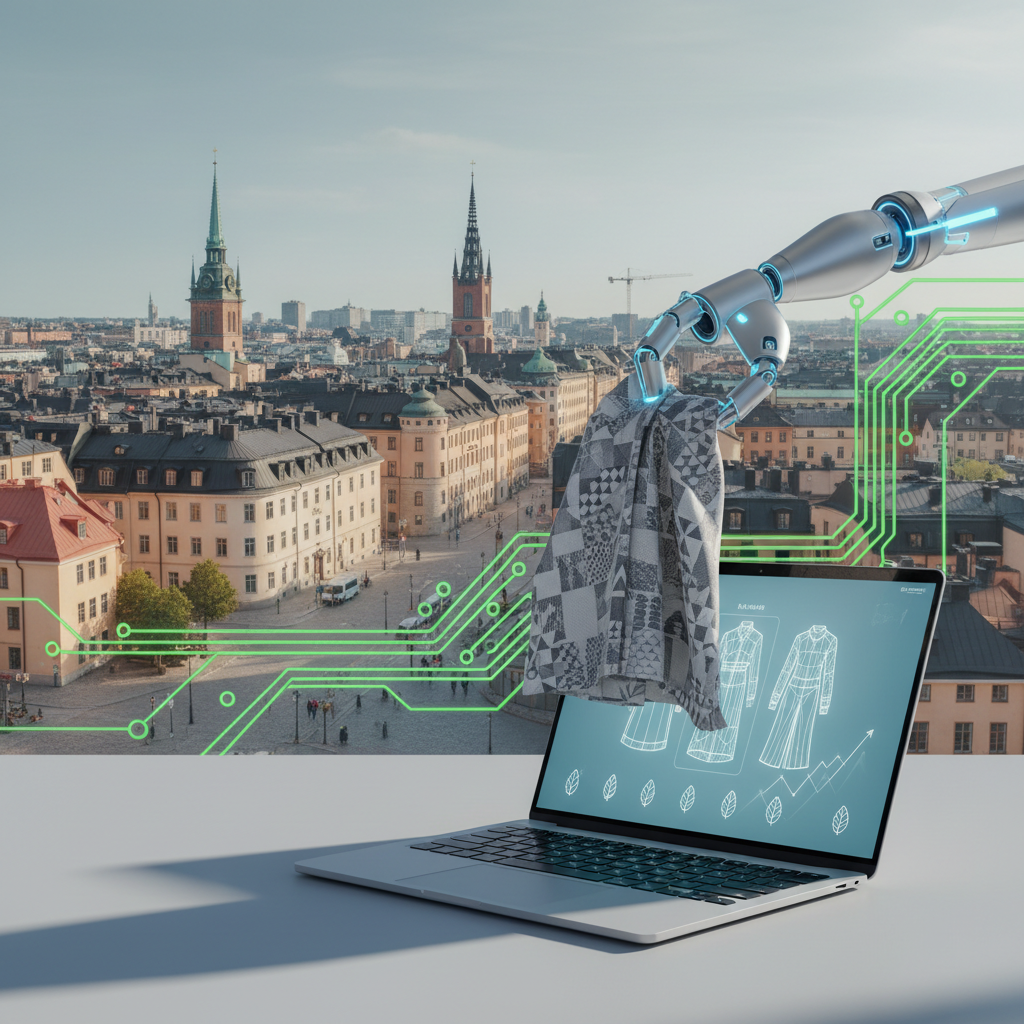
The impact extends beyond medicine into materials science. Understanding protein structures is crucial for designing new enzymes for industrial catalysis, developing biodegradable plastics, or engineering novel biomaterials with specific properties. For instance, researchers at VTT Technical Research Centre of Finland are exploring how AI can aid in designing protein based materials for sustainable packaging and advanced textiles. The ability to predict how proteins will fold and interact allows for the rational design of materials with desired strength, flexibility, or biodegradability characteristics, moving beyond trial and error experimentation.
Data from various sources underscores this transformation. According to a report published in MIT Technology Review, the global market for AI in drug discovery is projected to grow from an estimated $1.2 billion in 2023 to over $5 billion by 2028, a compound annual growth rate exceeding 30 percent. This growth is largely driven by the success and widespread adoption of protein folding AI. Similarly, investment in AI for materials science is also on an upward trajectory, albeit from a smaller base, as companies seek to innovate in areas like sustainable manufacturing and advanced composites.
However, it is important to maintain a grounded perspective. While AI provides powerful predictive capabilities, it does not replace the need for experimental validation. As Dr. Korpela cautioned, "AI models are excellent at generating hypotheses, but the real world is complex. Experimental biology remains essential to confirm these predictions and to understand the nuances that models might miss." This reflects a balanced, Finnish approach to technology adoption, recognizing both its immense power and its inherent limitations. The sauna principle of AI development, slow heat, lasting results, seems particularly apt here; a gradual, thorough integration rather than a sudden, uncritical embrace.
The Finnish education system, renowned for its quality and emphasis on critical thinking, plays a crucial role in preparing the next generation of scientists and engineers for this new era. Universities are adapting curricula to include computational biology, machine learning, and data science, ensuring that graduates are equipped to harness these powerful tools. This proactive stance is vital for maintaining competitiveness in a rapidly evolving global landscape.
Looking ahead, the integration of protein folding AI with other AI modalities, such as generative AI for novel molecule design or reinforcement learning for optimizing synthesis pathways, promises even greater breakthroughs. Companies like NVIDIA are providing the computational backbone, with their powerful GPUs enabling the training and inference of these complex models. The sheer scale of data being generated, combined with increasingly sophisticated algorithms, suggests that we are only at the beginning of this journey.
The impact of AI in protein folding is not a fleeting trend; it is a fundamental shift in how we approach biological and material challenges. For Finland, a nation that understands the value of practical innovation and resilience, as Nokia taught us something about reinvention, these advancements offer a pathway to continued leadership in research and development. The quiet revolution continues, transforming laboratories and industries, one precisely folded protein at a time. For further insights into the broader impact of AI in healthcare, one might consider the ongoing discussions around reasoning AI in healthcare [blocked].
This is not about replacing human ingenuity, but augmenting it. It is about accelerating the pace of discovery and bringing tangible benefits to society, a goal that resonates deeply with the pragmatic spirit of Nordic innovation. More information on AI's broader applications can be found on platforms like TechCrunch's AI section or Wired's AI coverage. The journey is long, but the path is becoming clearer, illuminated by the precise predictions of intelligent machines.