From my lanai here in Hawaiʻi, watching the waves break, I often think about the unseen forces that shape our world. The currents beneath the surface, the winds that carry seeds across oceans, and now, the invisible dance of proteins that dictates life itself. Google DeepMind's AlphaFold 3 isn't just a new algorithm; it's a telescope into that hidden universe, a quantum leap that could redefine medicine for generations, not just quarters.
For those who haven't been following the intricate world of molecular biology, AlphaFold, Google DeepMind's artificial intelligence system, has been a game changer since its first major unveiling. Its ability to predict a protein's 3D structure from its amino acid sequence with astonishing accuracy has already revolutionized structural biology. Now, AlphaFold 3 has arrived, and it's not just predicting proteins anymore. It's modeling the entire spectrum of life's molecules: DNA, RNA, ligands, and even how they interact. This isn't just an improvement; it's a paradigm shift, as if we moved from mapping individual islands to understanding the entire Pacific Ocean's complex ecosystem overnight.
Imagine the implications. Diseases like Alzheimer's, Parkinson's, and countless cancers, which have baffled scientists for decades, are fundamentally problems of molecular interaction. If we can accurately predict how a drug molecule, a ligand, will bind to a specific protein, or how a genetic mutation alters a protein's function, we can design treatments with unprecedented precision. This isn't just about finding new drugs; it's about designing them, almost bespoke, for specific conditions and even individual patients. The era of rational drug design, long a dream, is now within reach.
Demis Hassabis, CEO of Google DeepMind, articulated this vision clearly when he spoke about AlphaFold 3's potential. "This new model can predict the structure and interactions of all of life's molecules with unprecedented accuracy," he stated in a recent press briefing. "It opens up entirely new avenues for drug discovery and biological understanding, accelerating research that would otherwise take years or even decades." This isn't hyperbole; it's a sober assessment of a technology that has already proven its mettle.
But what does this mean for us, here in the Pacific? Hawaiʻi sits at the crossroads of Pacific and Silicon Valley, a unique vantage point to observe these seismic shifts. Our communities, from Honolulu to the remote outer islands, face unique health challenges, from the high rates of diabetes and cardiovascular disease to specific genetic predispositions. The traditional model of drug discovery, with its billion-dollar price tags and decade-long timelines, often leaves smaller, geographically isolated populations at the back of the queue. AlphaFold 3 could change that equation. By dramatically shortening the discovery phase and making it more efficient, it could lower the barrier to entry for developing treatments for neglected diseases or those prevalent in specific demographics.
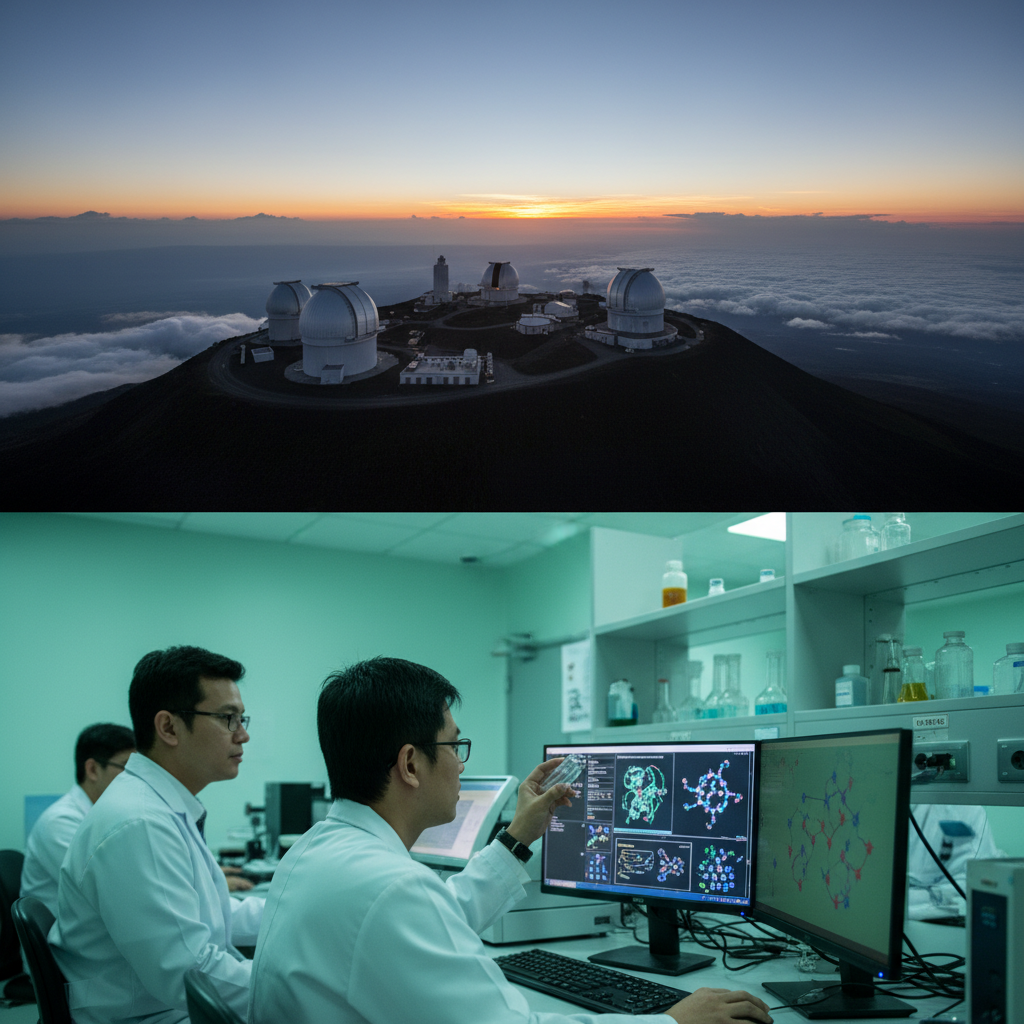
Consider the University of Hawaiʻi's John A. Burns School of Medicine, which has long pursued research into health disparities and tropical diseases. With AlphaFold 3, their researchers could potentially accelerate the identification of therapeutic targets for diseases like dengue fever, which impacts our neighbors across the Pacific, or even develop novel approaches to managing metabolic disorders common in indigenous populations. Dr. Jerris Hedges, Dean of Jabsom, has often emphasized the need for innovative solutions tailored to our unique island context. I can imagine a future where a small team of researchers, empowered by AlphaFold 3, could make breakthroughs that once required massive pharmaceutical labs.
However, the promise comes with a caveat, a question of pono, of righteousness. Who will truly benefit from this accelerated discovery? Will the fruits of this labor be accessible to all, or will they be hoarded by those with the deepest pockets? The ethical framework for AI, especially in healthcare, is paramount. Aloha means more than hello because it's a framework for ethical AI, demanding that these powerful tools serve the collective good, not just private profit. We must ensure that the intellectual property generated by AlphaFold 3's insights leads to affordable treatments, particularly for vulnerable populations across Oceania, rather than exacerbating existing health inequities.
This isn't just about Google DeepMind's technology; it's about the broader ecosystem. NVIDIA's powerful GPUs, which underpin much of this AI revolution, are becoming as crucial to scientific discovery as microscopes once were. The sheer computational power required to train and run models like AlphaFold 3 is immense, highlighting the ongoing race in hardware development. As Jensen Huang, CEO of NVIDIA, frequently points out, "Accelerated computing is not just about speed, it's about enabling breakthroughs that were previously impossible." This symbiosis between AI models and specialized hardware is pushing the boundaries of what's achievable in science read more about NVIDIA's impact here.
The implications extend beyond drug discovery. Understanding protein interactions is fundamental to agricultural science, material science, and environmental biology. Imagine designing enzymes that can break down plastics more efficiently, or engineering crops that are more resilient to climate change, a critical concern for low-lying island nations. The future is being built on volcanic rock, and the tools we create today will determine its shape for centuries.
Of course, there are challenges. The data sets required to train models like AlphaFold 3 are vast and complex, raising questions about data privacy and ownership. Furthermore, while AlphaFold 3 provides incredible predictions, experimental validation remains crucial. It's a powerful guide, not a final answer. The human element, the ingenuity of scientists, and the meticulous work in labs will always be indispensable. As Dr. Ewan Birney, Deputy Director General of Embl and a key figure in the initial AlphaFold validation, noted, "AlphaFold has already transformed how we approach biology. This new version will undoubtedly push those boundaries even further, but it's a tool for scientists, not a replacement for them." You can find more research on this topic at Nature Machine Intelligence.
Looking ahead, the next decade will be defined by how we integrate these AI capabilities into our scientific workflow. Will we see a proliferation of smaller, agile biotech companies leveraging AlphaFold 3, or will it primarily empower the existing pharmaceutical giants? Will governments and international bodies step up to fund open-access research and ensure equitable distribution of new therapies? These are not trivial questions. The answers will shape the health and well-being of billions. From my perspective, gazing out at the vast Pacific, the potential for good is immense, but only if we approach this power with the wisdom of our ancestors, with aloha at its core, ensuring that the benefits flow like the ocean's currents, reaching every shore.
This technology, born from the minds at Google DeepMind, represents a profound opportunity for humanity. It's a call to action for policymakers, scientists, and communities alike to collaborate, to ensure that this scientific marvel truly serves all of life, not just a privileged few. The waves of change are upon us, and it's up to us to navigate them wisely. For further insights into the broader AI landscape, consider exploring articles on MIT Technology Review. The journey has just begun.